Get Planning Permission On Your Farm
You know what your farm needs. We help you get the council to agree.
Planning a new shed, a barn conversion or a diversification? Whether the council says yes usually comes down to how your application is put together. We make sure they understand your farm first time.
Why farm planning applications get refused
Most farm planning refusals have nothing to do with the building you want. They happen because nobody explained to the council how your farm actually works.
What the officer often doesn't know
Many urban and suburban councils only see a handful of farm applications each year. Yours may be the only one on the officer's desk, and they often don't know what a beef finishing unit looks like, why you need a covered handling system, what a slurry separator does, or why your new building has to sit beside the yard, not behind the hedge.
Leave those questions unanswered and your application gets read against a residential rulebook. That is when it fails.
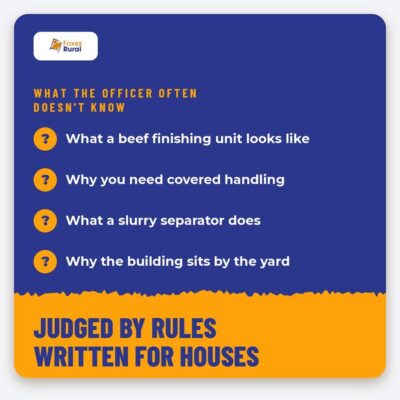
Planning officers aren't farmers. If you don't explain how your farm works, they'll judge your application against rules written for houses.

How we fix it
We write the story of your farm in language the council can follow, then place your project inside that story. Once the officer understands how your farm works, the planning case usually falls into place.
We understand farms because we farm
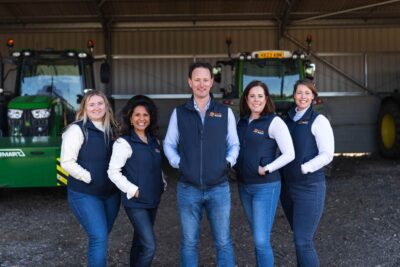
You know your farm better than anyone. The trouble is that the council doesn't. We farm and run our own diversified farm at Eight Ash Green, so we know what it's like to need a building, a conversion or a new income stream and to face a planning system that wasn't built with farmers in mind.
Most farm applications we see reach the council with 3 sentences of justification and a site plan. We give the officer 10 or more pages of context in plain English, referenced to the NPPF and your local plan, and backed by photos and evidence of how your farm runs day to day. The result is an officer who arrives at your site visit already understanding your case, and a decision that doesn't get bogged down in revisions.
Your 3 step plan to planning permission
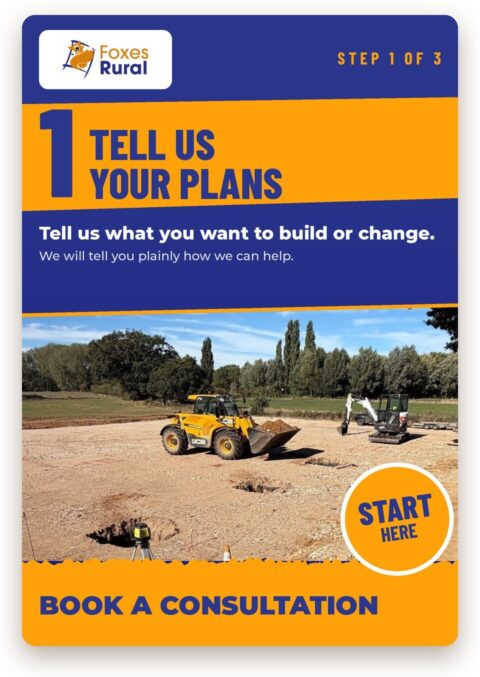
1. Book a planning consultation
Tell us about your farm and what you want to build or change, and we will tell you how we can help.
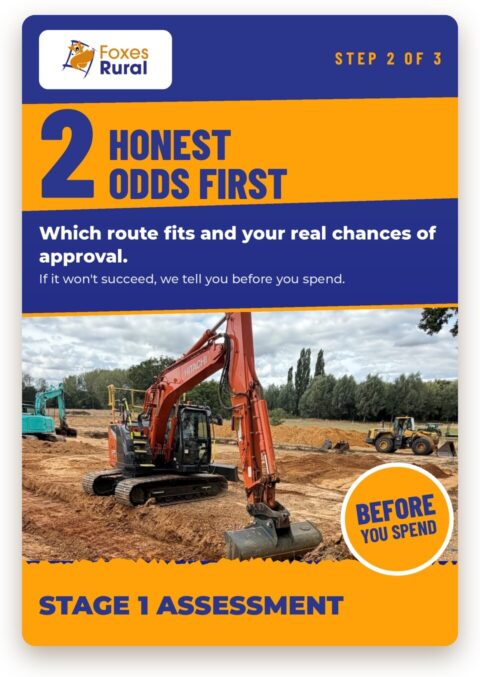
2. Get your Stage 1 assessment
Our Stage 1 Planning Strategy and Feasibility Assessment tells you which route fits, your realistic chances of approval, and what the application will cost. If we don't think your scheme will succeed, we tell you before you spend money on architects or surveys.
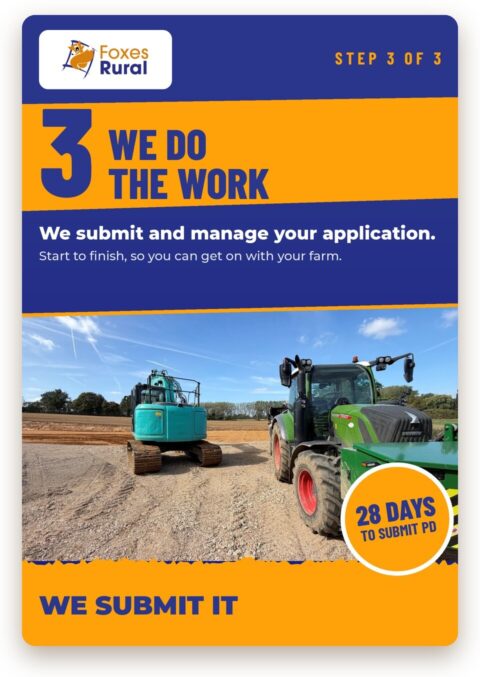
3. We submit and manage it
Our team handles your application from start to finish, so you can get on with running your farm.
The 4 routes to planning permission on a farm
There are 4 main ways to get permission on a farm in England. The right one depends on what you're building, where your farm is, and how much flexibility you want. We'll tell you which route fits before you commit to anything. Wales, Scotland and Northern Ireland each have their own rules, and we work across all of them.
1. Agricultural permitted development (GPDO Part 6)
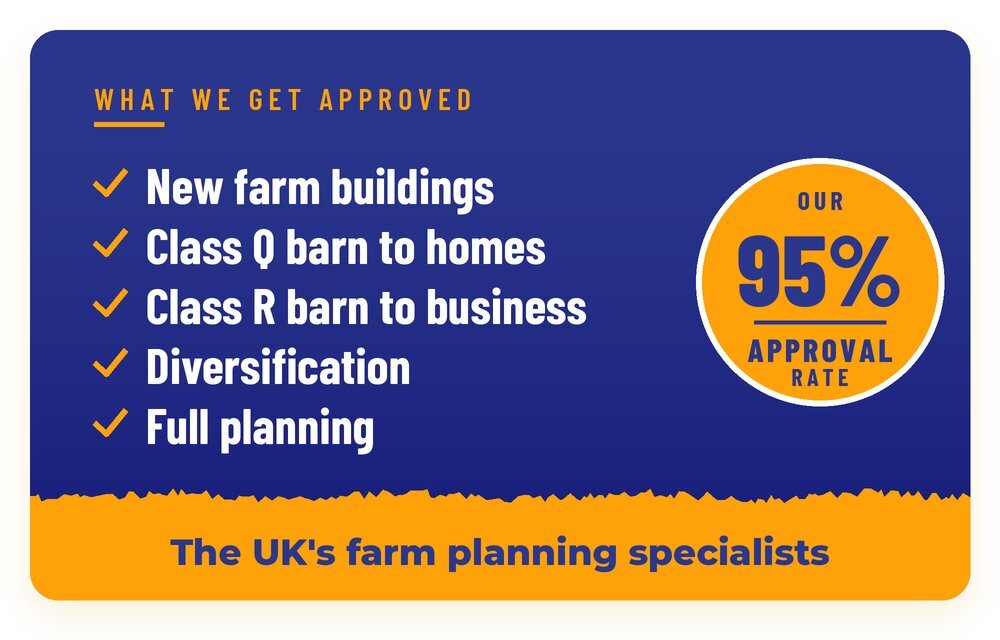
For new farm buildings, livestock housing, slurry stores, reservoirs, polytunnels and farm tracks. It is quick and cost effective, but limited in scope. Since 2024, farms of 5 hectares or more can put up buildings of up to 1,500 sqm. On holdings between 0.4 and 5 hectares the route is narrower and mainly covers extensions and alterations. This route is for kit your farming business needs, not for diversification.
2. Class Q: barn conversion to homes
For turning redundant farm buildings into homes. Since May 2024 you can create up to 10 homes per farm, up to 1,000 sqm in total, with each home up to 150 sqm. The big trap is the structural test: if the building would need substantial rebuilding, the application fails. We check that at the start, before you pay for drawings.
3. Class R: barn conversion to commercial use
For turning farm buildings into businesses such as storage, light industrial, shops, gyms, indoor sport, agricultural training, farm shops and outdoor recreation. The scope widened in May 2024 and the floorspace limit rose to 1,000 sqm. Class R is the route most farmers overlook. If you have a redundant barn and want a new income, look at Class R first.
4. Full planning permission
Slower and more expensive, but far more flexible. It is the right route when permitted development won't fit: agricultural workers' dwellings, larger conversions, glamping, farm shops at scale, equestrian buildings, replacement dwellings, intensive livestock units and anything involving a real change of use. Full planning lets you argue your case on its merits and negotiate conditions.
What farmers use us for
- New farm buildings: covered yards, livestock housing, machinery and grain stores, slurry systems, reservoirs.
- Barn conversions: Class Q to homes, Class R to commercial.
- Farm diversification: glamping, farm shops, wedding barns, equestrian, light industrial lets, holiday lets.
- Agricultural workers' dwellings: including homes for the next generation taking over the farm.
- The essential extras: discharge of conditions, Section 73 variations, lawful development certificates, and enforcement defence when something has been built without permission.
From bare field to finished building
Real farms, real groundworks. This is what happens once the planning is sorted.
What's at stake
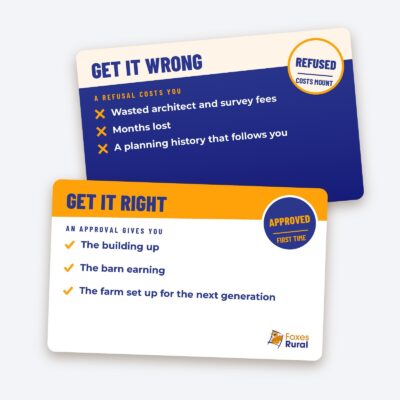
A poorly prepared application can cost you far more than the fee. A refusal means wasted architect and survey costs, months lost, and a planning history that makes your next attempt harder.
Get it right first time and you get the building up, the barn earning, and the farm set up for the next generation.
Frequently asked questions about farm planning permission
If your farm is 5 hectares or more, permitted development allows new buildings of up to 1,500 sqm, subject to prior approval on siting, design and appearance. On smaller holdings the rights are more limited. Some sites are excluded, for example within 25 metres of a trunk or classified road, or where the building would be designed as a home. If permitted development doesn't fit, you'll need full planning permission.
Class Q allows up to 10 homes per farm, up to 1,000 sqm in total and 150 sqm per home. The building must have been in agricultural use on 24 July 2023, with separate rules for buildings that were empty then or came into use later. The structural test is where most applications fall down, so we assess it at the start.
Class R lets you convert farm buildings to commercial uses such as storage, light industrial, shops, gyms, sport and recreation, training centres and farm shops. Since May 2024 the scope is wider and the floorspace limit has increased to 1,000 sqm. For most diversification schemes, Class R is the first route to look at.
It depends on the route. For agricultural permitted development, the council has 28 days to decide whether prior approval is needed. Class Q and Class R prior approval applications have 56 days. Full planning applications for most farm schemes have an 8 week target, rising to 13 weeks for major development.
Councils often ask to extend those deadlines, and checking and validating the application can add time at the start. Your Stage 1 assessment gives you a realistic timetable for your council before you commit.
No. We're based in Essex, but we work with rural councils across the UK, from Cornwall to Northumberland.
No planning consultant can guarantee an outcome, and anyone who says otherwise is misleading you. What we give you is an honest read on your chances before you commit. If we don't think it will succeed, we'll tell you. If we do, we'll build the strongest case for it.
It depends on the scheme, the route and what supporting reports the council needs, such as ecology, transport, heritage or drainage. A simple Class Q is at the smaller end; a full planning application for a large diversification is at the larger end. After your Stage 1 assessment we give you a fixed fee, with no hourly charges creeping up.
Many urban and suburban councils only see a handful of farm applications each year. Yours may be the only one on the officer's desk, and they often don't know:
- What a beef finishing unit looks like
- Why you need a covered handling system
- What a slurry separator does
- Why your new building has to sit beside the yard, not behind the hedge
Leave those questions unanswered and your application gets read against a residential rulebook. That is when it fails.
Talk To Us
Get in touch with the Foxes Rural team today to discuss your project and check whether your proposal qualifies.