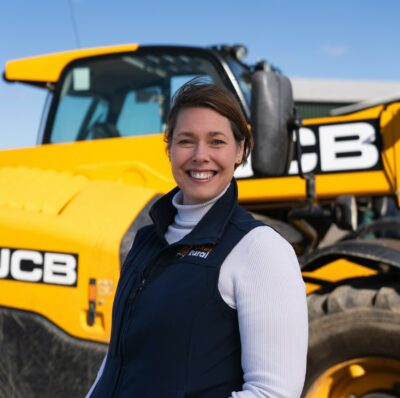
Get Planning Permission On Your Farm
The key point farmers miss is that most refusals are not because development is unacceptable, it’s because your story was never properly explained. When planning is framed around how your farm actually operates, permission becomes far more achievable.

Why farm planning applications get refused
Most farm planning refusals do not happen because the development was unacceptable. They happen because nobody properly explained how the farm actually works.
Planning officers in urban and semi-rural district councils see five or six farm applications a year. They do not know what a beef finishing unit looks like, why you need a covered handling system, what a slurry separator does, or why the new building has to sit beside the existing yard rather than tucked behind the hedge. If you do not tell them, the application gets read against a residential rulebook — and it fails.
We do not just write applications. We write the story of your farm in language the council can follow, then we put the development inside that story. Once an officer understands the operational logic of the holding, the planning case nearly always falls into place.
The 4 routes to planning permission on a farm
There are four main ways to get permission on a farm in England. The right one depends on what you are building, where the farm is, and how much flexibility you want once permission lands. We will tell you which route fits the project before you commit to anything.
1. Agricultural Permitted Development (GPDO Part 6)
The prior approval route for new agricultural buildings, livestock housing, slurry stores, reservoirs, polytunnels and farm tracks. Quick, comparatively cheap, and limited in scope. The 2024 changes lifted the size limits to 1,500 sqm on farms over five hectares, and 1,250 sqm on smaller holdings. Agricultural PD is the right route for kit you genuinely need for the farming business — not for diversification.
2. Class Q — barn conversion to housing
The prior approval route for converting redundant agricultural buildings into homes. Since May 2024 the rules allow up to ten dwellings per farm, 1,000 sqm of total floorspace, and 150 sqm per home. The trap most Class Q applications fall into is the structural test. If the building cannot reasonably be converted as it stands and would need substantial rebuilding to make the conversion work, the application falls over. We assess that at the outset, not after you have paid for the architect's drawings.
3. Class R — barn conversion to commercial use
The prior approval route for converting agricultural buildings to commercial uses — light industrial, storage and distribution, retail, gym, indoor sport, agricultural training, farm shops and outdoor recreation. The scope widened significantly in May 2024 and the floorspace cap moved up to 1,500 sqm. Class R is the route most farmers underuse. If you are sitting on a redundant barn and considering diversification, Class R should be the first option you look at.
4. Full planning permission
The discretionary route. Slower, more expensive, more flexible. Full planning is the right call when permitted development will not fit the scheme — agricultural workers' dwellings, larger barn conversions, full diversifications, equestrian buildings, glamping sites, farm shops at scale, replacement dwellings, intensive livestock units, and anything with a meaningful change of use. Full planning gives you room to argue the case on its merits and to negotiate conditions — something prior approval routes do not allow.
What Foxes Rural does that other agents do not
We do not push paperwork through. Every planning application we submit is built around how the farm operates day to day — what the kit is for, why it has to go where you have sited it, why the existing buildings will not do, and how the scheme fits the agricultural business as a whole.
That sounds obvious. It is not. Most of the farm planning applications we see arrive at the council with three sentences of justification and a site plan. The officer has no choice but to assess what is in front of them. We give them ten or more pages of context — written in plain English, properly referenced to the NPPF and the local plan, supported with photographs and operational evidence that show the officer what the farm actually does.
The result is a planning officer who turns up to the site visit already on the same page as you, and a determination that does not get bogged down in clarifications and revisions.
Our track record
Foxes Rural runs the largest agricultural planning pipeline in England and submits more rural planning applications than any other agent in the country. Our submitted application approval rate sits at 95%. We have taken cases all the way from prior approval for a livestock shed to full planning for multi-million-pound diversification schemes.
We guarantee that any permitted development application we are instructed on will be submitted to the local planning authority within 28 days. We are RICS and CAAV qualified, and we deal with rural local planning authorities across England — not just the East.
Our planning content has been watched over 8.28 million times by farmers facing planning problems across England. 36,000 farmers follow us on Facebook because the advice is accurate and direct. When you instruct Foxes Rural, you get the same knowledge applied to your farm specifically, by the team that produces it.
What farmers actually use us for
Most of what we send to councils falls into five categories. New agricultural buildings — covered yards, livestock housing, machinery and grain stores, slurry infrastructure, reservoirs. Conversion of redundant farm buildings — Class Q to housing, Class R to commercial. Farm diversification — glamping, farm shops, wedding barns, equestrian facilities, light industrial lets, holiday lets. Agricultural workers' dwellings, including succession planning for the next generation taking over the holding. And the unglamorous but essential side of the job: discharge of conditions, Section 73 variations, lawful development certificates, and enforcement defence when something has gone in without permission and needs regularising.
How a planning consultation works
Book a planning consultation online, with one of our farm planning consultants — there's no charge for that initial phone call. If you want formal advice on your scheme, this is carried out as a paid Stage 1 Planning Strategy Assessment, which we can deliver anywhere in the UK. Bring your title plans, your ideas, and whatever planning history the farm already has — previous decisions, conditions, refusals, anything on the council's planning portal that might be relevant.
By the end of the call you will know which route fits the scheme, what the realistic prospects of approval look like, and what it will cost to put the application together properly. If we do not think a scheme will fly, we will tell you before you spend money on architects, surveys or fees. If we think it will, we will send a fee proposal the same week.
Frequently asked questions about farm planning permission
Do I need planning permission for a new agricultural building?
If the farm is over five hectares, you can use Agricultural Permitted Development for buildings up to 1,500 sqm — subject to prior approval from the council on siting, design and external appearance. Below five hectares the limits tighten to 1,250 sqm. Certain sites are excluded entirely — within 25 metres of a classified road, in the curtilage of a listed building, in a National Landscape, in a National Park, or where the building would be a dwelling. If permitted development does not fit, you will need full planning permission.
Can I convert my barn into a house?
Class Q allows the conversion of agricultural buildings to dwellings, up to ten homes per farm and 1,000 sqm of total floorspace, with a 150 sqm per-home cap. The building has to have been in agricultural use on or before 24 July 2023. The structural test is where most applications fail — you cannot materially rebuild the structure to make the conversion work, and the council will assess whether the existing fabric can carry the proposed conversion. We make that call at the outset.
What is Class R and could I use it on my farm?
Class R is the permitted development route for converting agricultural buildings to commercial uses — storage, light industrial, retail, gym, sport and recreation, training centres, farm shops, outdoor leisure. Since May 2024 the scope is wider and the floorspace allowance has lifted to 1,500 sqm. For most farm diversification schemes Class R is the first route to consider before reaching for full planning.
How long does a farm planning application take?
Prior approval applications under Agricultural PD, Class Q and Class R have to be determined within 56 days. Full planning permission has a statutory eight-week target, but most rural councils are running 12 to 16 weeks in practice and major or controversial applications take longer. We will give you a realistic timetable at the consultation.
Do you only work in Essex?
No. Foxes Rural is based in Essex and our biggest pipeline is here, but we work nationally across England. We are used to dealing with rural local planning authorities from Cornwall to Northumberland.
Will you guarantee planning permission?
No planning consultant can guarantee a planning outcome — anyone who tells you otherwise is misleading you. What we can give you is an honest, realistic read on the prospects of approval before you commit. If we do not think a scheme will succeed, we will tell you straight. If we do, we will build the strongest case for it.
What does a farm planning application cost?
Fees depend on the complexity of the scheme, the route, and what supporting evidence the council will need (ecology, transport, heritage, drainage and so on). A simple Class Q is the smallest piece of work; a full planning application for a diversification scheme with multiple buildings is the largest. We give a fixed fee proposal after the initial consultation — no hourly creep.
Talk To Us
Our farm planning consultants offer online planning consultations to discuss your specific requirements and how we can help.