Material Start on Planning Permission: Why Your Footings May Not Count
You have full planning permission for a new farm building. The digger has been in, the footings are dug and the slab is down. It feels safe. It may not be. If a condition that had to be cleared before work started was never signed off, those footings may not count in law, and your permission could quietly expire with a building half built on it. Here is how the rules work in England, where farmers get caught out, and the 3 steps that protect your permission.
How Long Your Planning Permission Lasts
Unless your decision notice says otherwise, a full planning permission must be begun within 3 years of the date it was granted. This comes from section 91 of the Town and Country Planning Act 1990 and appears as a standard condition on almost every farm building approval. Miss the deadline and the permission dies. There is no extension and no grace period.
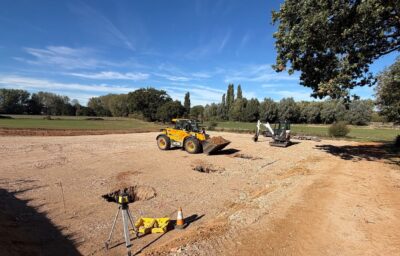
To begin development, you need a material start. Section 56 of the Act says development begins when a "material operation" is carried out. That includes any work of construction on the building, digging a trench that will hold its foundations, laying an underground main or pipe to those foundations, and work on a road or access that forms part of the scheme.
The bar is low, but it is not zero. Digging a proper foundation trench in the right place counts. Knocking in a few pegs or tipping a pile of hardcore is risky ground. Councils will argue that is not real building work, and you do not want to be the test case.
The Condition That Can Wipe Out Your Material Start
Most farm building permissions carry pre commencement conditions. These are conditions that need the council's written approval before any work starts, such as details of drainage, external materials, landscaping, ecology or a construction management plan.
If you start work before one of these is discharged, the works may be unlawful and may not implement the permission at all. This is a long established principle in planning case law. There are narrow exceptions, but no farmer should plan on relying on one.
Councils do not always flag the problem at the time. You can have a perfect slab and a new shed frame on order, and the permission can still lapse on its third anniversary because the footings were dug in breach of a condition. Finding that out after the deadline usually means starting again with a fresh application.
The same risk applies if the footings are not dug where the approved plans show. Works that depart from the permission are not works carried out under it.
What This Means for Your Farm Business
Farm buildings rarely go up in one go. You get the permission, then harvest, cash flow, the bank and the weather decide when the steel arrives. That is exactly why a lawful material start matters. Once the permission has been properly begun it no longer expires, and you can finish the building when the business is ready. Councils do hold a power to serve a completion notice on stalled schemes, but it is rarely used.
Get it wrong and the cost is real. A fresh application is judged against today's policies, not the ones in force when you were first approved, and planning fees in England rise on 8 December 2026. Ecology, biodiversity net gain and drainage requirements may all have moved on since your original consent.
These are the 3 steps we recommend to every farmer with an approved building:
- Get every pre commencement condition approved in writing before a digger moves. Check the decision notice line by line. Any condition that says "prior to commencement" or "before development begins" must be discharged first. Keep the council's discharge letter with your permission.
- Dig the footings exactly where the approved plans show. Take dated photographs and measurements, and email them to the council so there is a clear record of when the material start was made.
- Apply for a Lawful Development Certificate. A certificate under section 191 of the Act confirms that the works were lawful and that the permission has been implemented. It gives you, your lender and any future buyer certainty that the permission is safe.
Do this well before the 3 year deadline. The council has 8 weeks to decide an application to discharge conditions, so leaving it to the final months is a gamble. If you have a building planned for next year, use the quieter weeks once autumn drilling is finished to get it sorted.
How Foxes Rural Can Help
You know what your farm needs. We make sure the paperwork does not stand in the way. We check your decision notice, discharge your pre commencement conditions, advise on when and how to make a lawful material start, and prepare the Lawful Development Certificate application that confirms it. We regularly help farmers rescue permissions that are weeks from running out. Farm planning is all we do, and our team manages your application from start to finish. We work with farmers across the UK, so whether you are looking for farm planning consultants in Lincolnshire or further afield, we can help.
Call us on 01206 481981 or get in touch through our Contact page to check your permission before the clock runs out.