
Duchy's 25 Year Regenerative FBT: What Tenants Need to Know
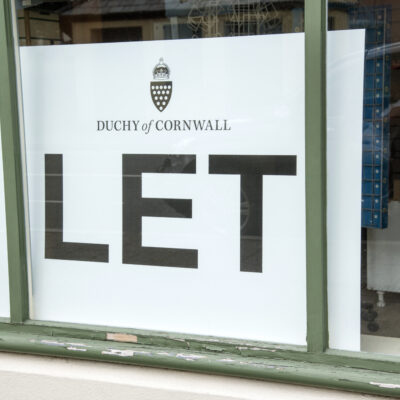
The Duchy of Cornwall has just launched what is believed to be the first 25-year regenerative Farm Business Tenancy in England. Monkhall Farm — 900 acres near Hereford, managed by Ceres Rural — closes for applications at 12pm on 15 June 2026. If you are considering applying, or if this signals something bigger about the direction of farm tenancies, there are planning questions you need to answer before you sign anything.
What Is a 25-Year Regenerative FBT?
A Farm Business Tenancy under the Agricultural Tenancies Act 1995 has no minimum or maximum duration. In practice, most FBTs run for three to five years. A 25-year term is exceptional.
The Duchy is calling this a regenerative FBT — an rFBT. The model is designed to give a tenant enough time to invest in soil health, biodiversity, and reduced-input farming without the insecurity of a short term. The tenancy begins in September 2026, timed to coincide with the Government's Sustainable Farming Incentive reopening.
Matthew Morris, rural director at the Duchy, described Monkhall as "a rare opportunity to develop a forward-looking, regenerative farming business." The Duchy intends the incoming tenant to create a commercially viable farm while reducing reliance on external inputs.
Why the Term Length Changes the Financial Calculation
A three-year FBT offers little justification for capital investment. A 25-year FBT changes that entirely.
If you hold a farm for 25 years, the case for investing in buildings, infrastructure, and environmental capital is fundamentally different. You can justify a grain store. You can justify a new livestock building. You can justify applying for planning permission.
That is exactly where planning advice intersects with this kind of opportunity — and where tenants regularly come unstuck.
Class Q and Class R: Do You Actually Have the Rights?
Under Part 3 of the Town and Country Planning (General Permitted Development) (England) Order 2015, agricultural buildings can be converted to residential use under Class Q or commercial use under Class R without full planning permission, subject to prior approval.
Under the post-May 2024 rules, Class Q permits up to ten dwellings with a total floor space of 1,000 sq.m. Class R permits commercial conversion up to 1,000 sq.m and now includes Class E uses.
Here is the planning question no one is asking prospective tenants: do you actually have the right to exercise Class Q or Class R?
The answer is not automatic. These permitted development rights attach to the agricultural unit. A tenant can apply for prior approval — but only where the tenancy terms do not restrict it. Most FBTs are silent on this. Some are not.
The Landlord Consent Question
Monkhall Farm is a Duchy estate. The Duchy is a sophisticated landlord with its own estate management team. Before a tenant converts a building or erects a new agricultural structure, landlord consent is almost certainly required under the tenancy agreement — separate from any planning permission.
This is one of the most common misunderstandings we encounter in our practice across Essex and the East of England. Tenants assume that permitted development rights give them freedom to act. They do not. PD rights remove the need for planning permission from the local planning authority. They do not override the landlord's contractual rights.
For a 25-year tenancy on an estate of this profile, you need to understand both frameworks before you make any commitments.
Agricultural Permitted Development: Building for a Regenerative System
If you are farming regeneratively for 25 years, you will need buildings. Compost stores. Cover crop seed stores. Livestock for soil-building rotations.
Under Part 6 of the GPDO, agricultural permitted development allows new or extended buildings up to 1,500 sq.m for non-livestock uses on units over five hectares. Livestock structures are capped at 1,000 sq.m. Prior approval is required for buildings over 1,000 sq.m or within 400 metres of a dwelling.
At 900 acres, Monkhall Farm clearly qualifies for these rights in principle. In practice, the Duchy's planning and estate constraints, any Article 4 directions, and the farmhouse proximity all need checking before a tenant assumes they can build freely.
SFI Timing Is Not Accidental
The tenancy start date of September 2026 aligns with the Government's restart of the Sustainable Farming Incentive. That is not a coincidence. The Duchy has structured this to give the incoming tenant maximum access to agri-environment funding from day one.
SFI actions relevant to regenerative arable systems — soil health, hedgerow management, integrated pest management — could generate significant income for the right applicant. But SFI agreements interact with planning conditions. If a building on the unit has a condition restricting its use, or if land is subject to an agricultural occupancy condition, specialist advice before signing is not optional.
What Should a Prospective Tenant Check Before Applying?
Understand what buildings already exist on the unit and their planning history. Check whether any buildings have been converted, extended, or had their use changed — because that affects what permitted development rights remain available.
Assess whether the farmhouse proximity creates a prior approval obligation for any new structure. Review the tenancy heads of terms for any clauses that restrict development activity. And take specialist planning advice before the viewing days on 8 or 13 May.
Frequently Asked Questions
Can a tenant apply for Class Q conversion on a Duchy farm?
In principle, yes. The Agricultural Tenancies Act 1995 does not prevent tenants from exercising permitted development rights. In practice, it depends on the tenancy agreement. A Duchy tenancy at this level will be carefully drafted. Get specialist advice before assuming you have the right to apply.
Does a 25-year FBT give you agricultural permitted development rights?
Yes, if the tenancy is a genuine agricultural tenancy and the unit meets the qualifying criteria under Part 6 of the GPDO. The unit size at Monkhall clears the five-hectare threshold comfortably. The key constraints are landlord consent under the tenancy, any Article 4 directions, and proximity of the farmhouse to any proposed structure.
What does the rFBT model mean for the wider tenanted sector?
If the Duchy's model gains traction, other large estates will follow. For a sector where most tenants have operated on short FBTs with minimal capital investment, this is a structural shift. Tenants who understand their planning position from the outset will extract significantly more value from a long tenancy than those who do not.
What This Signals for Farm Tenancies
The Duchy is a significant landlord. A 25-year rFBT from an estate of this scale is not a quirk — it is a statement of direction.
In our experience working with farmers across Essex and the East of England, the single biggest missed opportunity on tenanted farms is the failure to take planning advice before a tenancy starts. Buildings get tied up in restrictive conditions. Conversion potential gets missed. Funding opportunities are left on the table.
A 25-year regenerative FBT is a genuine opportunity for the tenanted sector. Make sure your planning position is as strong as your farming plan.
If you are considering the Monkhall opportunity or want to understand what a long-term tenancy means for your planning rights, contact Foxes Rural for specialist advice.